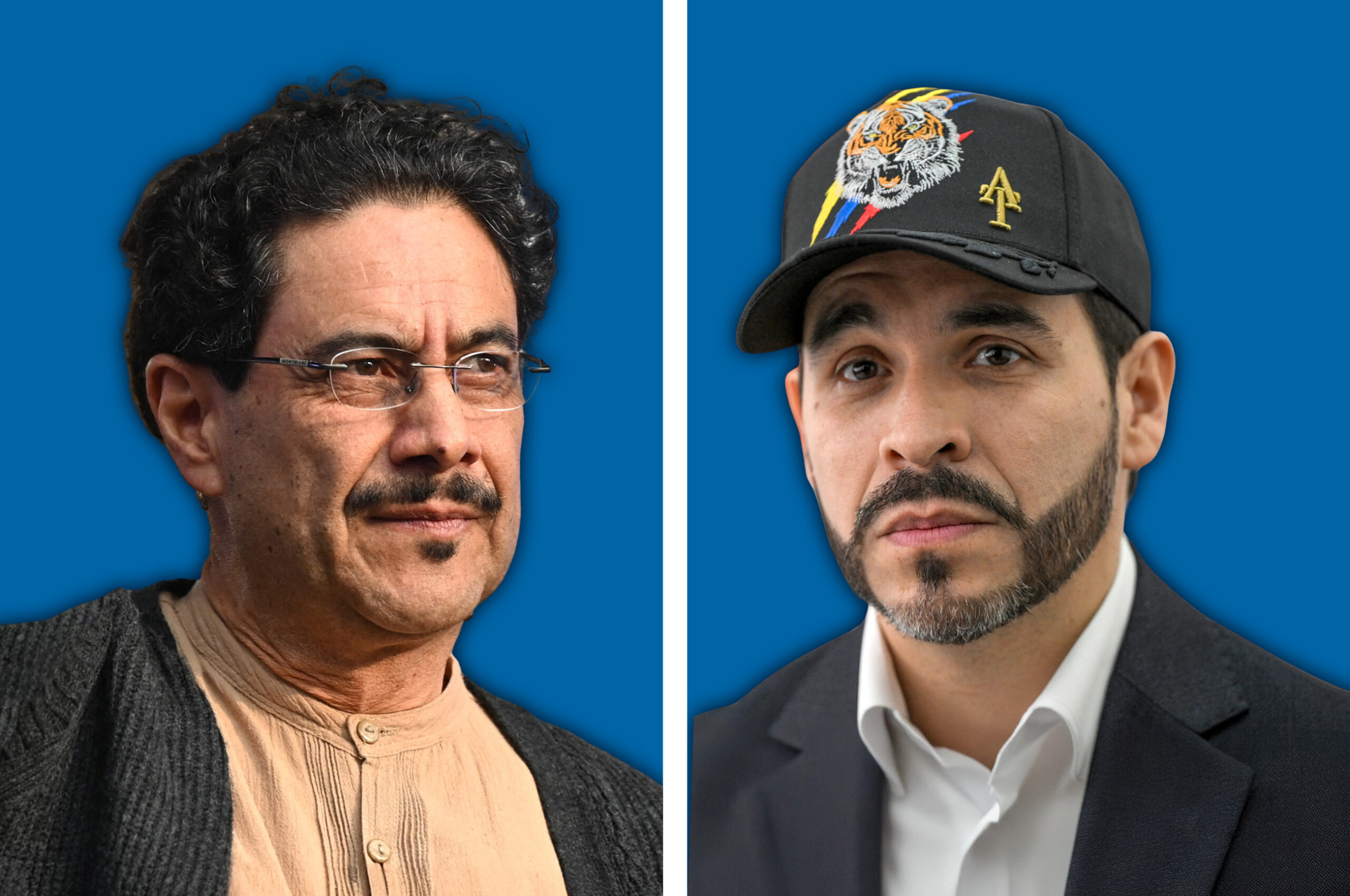
Following the recent gathering of various political, economic, and business leaders at the World Economic Forum in Davos, Switzerland, media outlets such as El Tiempo had the opportunity to briefly interview Ecuador's president, Daniel Noboa. On this occasion, questions referred to the bilateral relationship between Ecuador and Colombia, as Quito had been expressing its dissatisfaction with "the lack of cooperation" from Bogotá regarding issues that concern both countries, such as drug trafficking and armed conflicts. Prior to Davos, Noboa strategically built a discursive terrain that aimed to point to Colombia as an actor lacking initiative and commitment to resolve the security crisis afflicting the border shared by these two countries.

During the interview, Daniel Noboa stated that "It is important that we are all aligned on the issue of security. We have spoken several times with President Gustavo Petro and on the border issue we do not see work being done on the other side. And we need it. Our people need it."
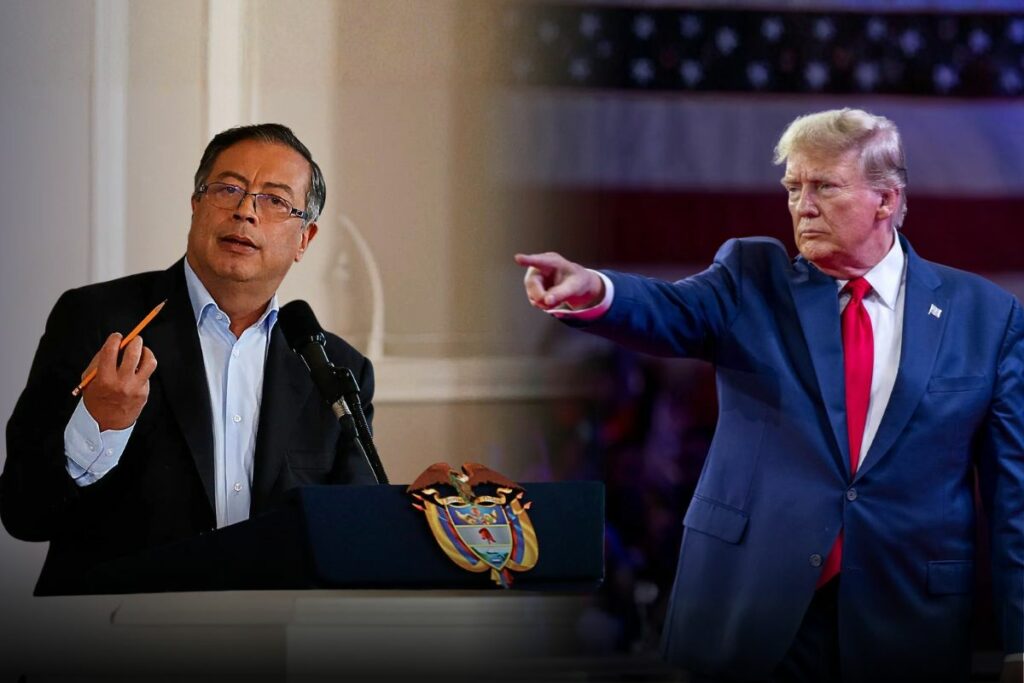
Following this narrative, the president arrived at a unilateral decision where, starting February 1st, he intends to increase tariffs on products imported from Colombia to 30%. In that same interview with El Tiempo, Noboa called the tariffs "Security taxes" with the argument that "Security costs, technology costs, border control costs. And all the measures we have to take to protect our people have a cost." These words make the tariffs appear as a legitimate national defense measure against what he denounces as a lack of action by Gustavo Petro at the border, which, according to Noboa, would be having a direct impact on Ecuador's security.
From that point, political and economic analysts, and even Colombian public opinion, reacted to this offensive, bewildered considering it involves a neighboring country with which a long history of joint work in social, economic, commercial, political, and even cultural matters is shared. Thus, Bogotá opted to take equivalent measures, applying the same percentage to the import of 20 products from Ecuador.
"Colombia maintains its willingness for dialogue and the search for negotiated solutions, but has the obligation to act when the rules that have historically governed the commercial relationship between countries are unilaterally modified."
Additionally, Ecuador's measure caused major rejection from Colombia's Ministry of Energy, with Edwin Palma Egea at the helm, who expressed strong disapproval of this tariff imposition. Subsequently, Palma decided to cut the private sale of electricity to Ecuador.
Tariff war is the name circulating in various media outlets like Noticias Caracol or La Base latinoamérica to describe these diplomatic tensions that put at risk the integration and cooperation of Latin American peoples. Given this regional scenario and adding the international context that has been affecting different countries around the world, especially in this part of the continent, it is pertinent to analyze the arguments that motivated the Ecuadorian president to make a unilateral decision that destabilizes the commercial relationship these brother countries maintain.
The border and shared challenges
Colombia and Ecuador share a land border of approximately 586 kilometers that extends from the Pacific coast to the Amazon region. Historic activities of commercial exchange, border mobility, and bilateral cooperation take place there. Despite finding legal dynamics that allow cooperation between both economies, illicit commerce also exists, such as drug smuggling (drug trafficking) and territorial contamination by non-state armed groups, conflicts that have impacted both States for approximately three decades to the present day. It can be agreed that these are issues that enter the agendas of both governments as a matter of utmost urgency to resolve, leading them to have a common purpose.

The critical point is when one of the leaders takes the liberty of accusing the other with such severity of remaining passive in the face of this crisis, as if there were no disposition or action on the other side to maintain regional peace and security. That is why analyzing these statements with determination and seriousness allows for clarifying the complete scenario, clearing the path to understand the weak points of the argument.
The figures that contradict Noboa
Once Noboa confirmed his tariff imposition, Gustavo Petro published on his social networks –X and Instagram– a brief report of cocaine seizures that his government has successfully achieved since taking office. The figures show that Petro's government seized more than 200 tons of cocaine, and not only that, but complemented this operation with the recovery of hundreds of rifles and, as the president states, the installation of "several intelligence coordination centers in Puerto Leguízamo, Putumayo, Colombia, Manaus, Brazil and we inaugurated in Leticia, Amazonas, one of the 16 modern radars I put out to bid..", asserting that "Collaboration with Ecuador's military forces is close."
For its part, El Espectador presents the following figures: "Between August 2022 and to date, authorities have seized 2,126 tons of drugs. Leading the list is cocaine, with 1,527,578 kilograms seized; followed by marijuana, with 599,132 kilograms seized, and heroin, with 758 kilograms."
These data, while reflecting a significant number, also demonstrate the direct and clear action of the Colombian government to stop criminal activities and shrink the space for drug traffickers who have done so much harm not only to Colombia but to the entire world. That is why Noboa's words are a rather weak argument to justify his tariffs as security taxes, as they diminish the importance and veracity of the facts and actions that have been executed in recent years by Colombia and also in mutual cooperation between the involved States.
The real impact of tariffs
Beyond refuting this claim, attention must be paid to the fact that these taxes would not be achieving the objective stated by the Ecuadorian president, which is supposedly to "protect his people." In an interview with La FM, Bruce Mac Master, president of the National Association of Industrialists in Colombia (ANDI), was invited to share his point of view –based on his knowledge as a businessman and economist– regarding the effects of tariffs on citizens of both Ecuador and Colombia.
"It is very unfortunate the decision that the president of Ecuador has apparently made, because in addition to differences he surely has with the Colombian government, he is actually affecting Ecuadorian consumers. A large number of consumers depend on products coming from Colombia."
Mac Master added that for Colombia, Ecuador is the sixth destination in terms of total exports and that both economies are very important to each other. In energy matters, Ecuador depends deeply on Colombia, which is why Mac Master considers Noboa's decision to be wrong.
Complementing the opinion of the ANDI president, the argument of the Minister of Mines and Energy is added, who made the decision to cut the supply of electricity to Ecuador. Through X, Palma states that in energy matters "Colombia has acted with facts, cooperation, and solidarity: We maintained energy sales to Ecuador when their system needed it most, even exporting on many occasions more than 450 MW in a sustained manner (90% of the capacity that the export infrastructure has), even when our system was going through the most critical hydrological drought situation in all its history due to the effects of climate change. Even so, we maintained exports and supply to Colombian homes."

The minister stated that it was vitally important to protect energy sovereignty, protect national interest, and Colombia's dignity in the face of tariff threats.
So, if it is not a real lack of work as Noboa claims and it is also not a decision that is benefiting Ecuadorians themselves, what led him to construct this discursive line?
Ecuador's internal crisis
Daniel Noboa won the early elections in 2023 to complete the pending term following the resignation of the previous president –Guillermo Lasso–. In 2025, he won again and remained as the official president of Ecuador. The country has been mired in an internal security crisis that intensified last year, leaving Ecuador positioned in a ranking with the highest homicide rate in Latin America, indicating an increase in violence to extreme levels between 2024 and 2025.
Added to this is that various expert analyses estimate that up to 70% of the world's cocaine supply flows through Ecuadorian territory, being exported mainly through Pacific Ocean ports.
Conclusion
The scenario described allows us to maintain that the imposition of tariffs on Colombia hardly responds to a comprehensive and effective strategy to confront the security crisis that Ecuador is going through. As the International Crisis Group warns, the central problem does not lie solely in external factors or in the supposed inaction of neighboring countries, but in the structural limitations of the Ecuadorian State to recover territorial control, strengthen its security institutions, and articulate sustained policies against organized crime. Institutional fragmentation, the weakness of the prison system, and the capacity for penetration of illicit economies in strategic sectors —such as Pacific ports— continue to be unresolved challenges.
In this context, the construction of a narrative that shifts responsibilities toward Colombia seems to respond more to a short-term discursive strategy than to a public policy aimed at attacking the root causes of violence. Far from contributing to a coordinated regional solution, the unilateral decision to increase tariffs strains a bilateral relationship historically based on cooperation and ends up affecting Ecuadorian citizens themselves, both in economic and energy terms.
Thus, more than a problem of lack of cooperation "on the other side," the core of the crisis lies in the absence of a coherent, sustained, and multilateral state approach by Daniel Noboa's government, capable of confronting a transnational phenomenon that, by its nature, requires complex, coordinated, and long-term responses. As long as these policies are not consolidated, measures such as tariffs will hardly translate into greater security or stability for Ecuador.
Bibliography
- International Crisis Group - "Paradise Lost: Ecuador's Battle with Organised Crime" - Analysis of Ecuador's political, economic, social, and security deterioration. https://www.crisisgroup.org/rpt/latin-america-caribbean/ecuador/109-paradise-lost-ecuadors-battle-organised-crime
- El Espectador - "Drug seizure figures in Colombia: over 2,000 tons" - Official drug seizure statistics. https://www.elespectador.com/judicial/asi-estan-las-cifras-de-incautacion-de-drogas-en-colombia-van-mas-de-2000-toneladas/
- Diario Red / Orlando Pérez - Journalistic analysis of Daniel Noboa's decision. https://www.youtube.com/watch?v=cenNCeyq0T4
- Reuters - "Colombia suspends electricity sales, imposes 30% tariff on Ecuador" - Colombia's response measures. https://www.reuters.com/world/americas/colombia-suspends-electricity-sales-imposes-30-tariff-ecuador-escalating-trade-2026-01-22/